Windows SmartScreen Bypass Vulnerability Exploited in DarkGate Malware Campaign
Critical Windows SmartScreen bypass vulnerability (CVE-2024-21412) exploited in DarkGate malware campaigns. Learn how to protect your systems.

More in vulnerabilities
Critical Windows SmartScreen bypass vulnerability (CVE-2024-21412) exploited in DarkGate malware campaigns. Learn how to protect your systems.
.URL internet shortcut files - Exploitation Status: Actively exploited in the wild - Threat Actor: DarkGate malware operators - Impact: Malware download without security warnings, user deception ## Affected Systems The vulnerability affects a wide range of Windows operating systems, including: - Windows 10 (all versions) - Windows 11 (all versions) - Windows Server 2019 - Windows Server 2022 ## Attack Chain The attack typically begins with a phishing campaign where users are tricked into downloading a malicious file. The file, often disguised as a legitimate software installer, exploits the SmartScreen bypass vulnerability to execute the DarkGate malware. Once installed, the malware can perform a variety of malicious activities, including data exfiltration, keylogging, and further payload deployment. ### Infection Chain 1. Phishing Campaign: Users receive a PDF containing a Google DoubleClick Digital Marketing (DDM) open redirect link. 2. Open Redirect: The link redirects users to a compromised web server hosting a malicious .URL internet shortcut file. 3. Exploitation of CVE-2024-21412: The .URL file exploits the vulnerability to bypass Windows Defender SmartScreen protections. 4. Malicious Installer: Users are prompted to download and execute a fake software installer (e.g., NVIDIA, Apple iTunes, Notion). 5. DLL Sideloading: The installer sideloads a malicious DLL file, which decrypts and deploys the DarkGate payload. ## Microsoft's Response Microsoft addressed the vulnerability in its February 2024 Patch Tuesday update. The patch fixes the security feature bypass, preventing attackers from exploiting the flaw to distribute malware. Users are strongly advised to apply the patch immediately to protect their systems. ## Mitigation and Recommendations To mitigate the risk of exploitation, users and organizations should: 1. Apply the Patch: Ensure all affected systems are updated with the latest security patches from Microsoft. 2. Enable Additional Security Features: Use additional security measures such as Microsoft Defender for Endpoint and Microsoft Defender Antivirus to detect and block malicious activities. 3. Educate Users: Train users to recognize phishing attempts and avoid downloading files from untrusted sources. 4. Monitor Systems: Regularly monitor systems for unusual activity and investigate any signs of compromise. ## Broader Implications The exploitation of CVE-2024-21412 highlights the importance of defense-in-depth strategies. Relying solely on built-in security features like SmartScreen is insufficient to protect against sophisticated threats. Organizations should implement a multi-layered security approach that includes: - Endpoint Protection: Advanced endpoint protection solutions to detect and block malware. - Network Security: Firewalls and intrusion detection systems to monitor and block malicious traffic. - User Education: Regular training to raise awareness about phishing and other social engineering attacks. - Incident Response: A robust incident response plan to quickly address and mitigate security breaches. ## Conclusion The discovery and exploitation of CVE-2024-21412 serve as a stark reminder of the evolving threat landscape. Attackers are continually finding ways to bypass security features, underscoring the need for vigilance and proactive security measures. By applying the latest patches, educating users, and implementing a comprehensive security strategy, organizations can better protect themselves against these emerging threats. ## Visual Representation Here are some images related to the Windows SmartScreen bypass and DarkGate malware: 1. Windows Smart App Control and SmartScreen Bypass Techniques  2. Mark of the Web Bypass - Red Canary Threat Detection Report
 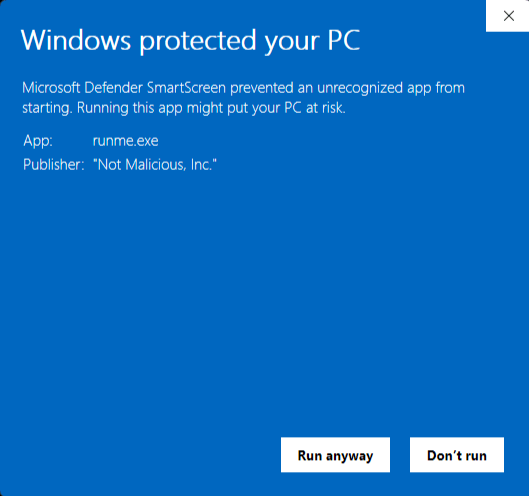 3. Ensure 'Configure Windows Defender SmartScreen' is set to 'Enabled'
 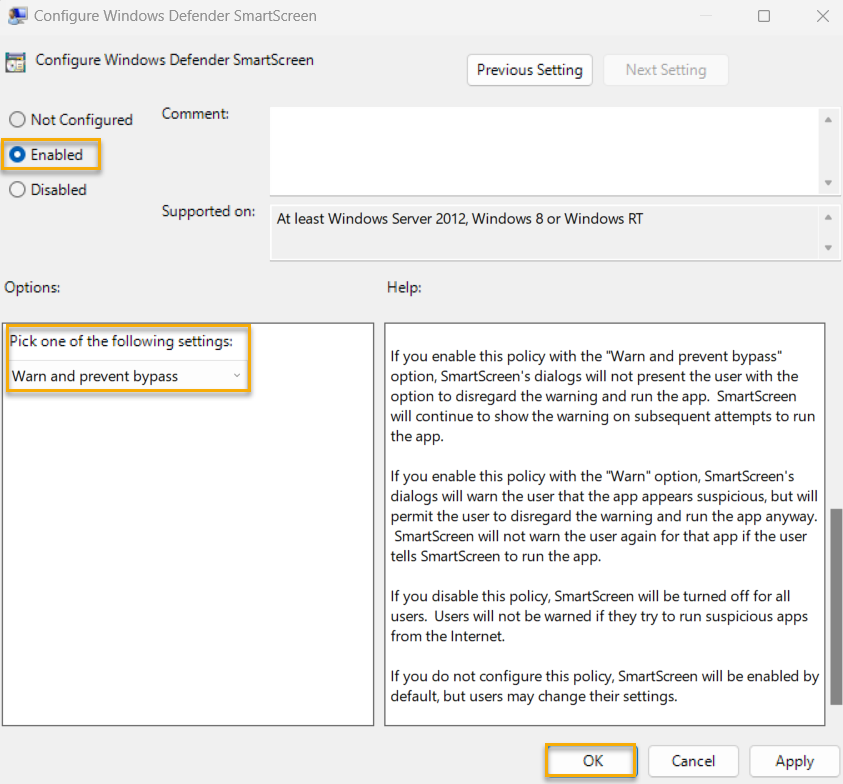 4. Ensure 'Prevent bypassing of Microsoft Defender SmartScreen warnings'
  5. Hackers Exploit Windows SmartScreen Vulnerability Hydra, Lumma, & Meduza Stealers
 .webp?w=696&resize=696,0&ssl=1) These images illustrate the severity and impact of the vulnerability, as well as the ongoing efforts to mitigate such threats.
These images illustrate the severity and impact of the vulnerability, as well as the ongoing efforts to mitigate such threats.